.svg)


The 12-Touch Lead: Why Your Best Internet Prospect Won't Close This Week

The quote that went nowhere
A producer ran numbers for a prospect last spring. Auto and home bundle. The prospect was shopping hard -- frustrated with a recent rate increase and ready to move.
The quote came back higher than what they were paying.
It wasn't close. A speeding ticket from eighteen months ago was dragging up the auto rate. A homeowner's water damage claim from two years prior was doing the same on the property side. The numbers didn't work, and the prospect said so. Most agents would have thanked them for their time, tagged the lead as "lost," and moved on.
This agent did something different. He pulled up the details and did the math. The speeding ticket would drop off the prospect's record in December. The homeowner's claim would age out of the rating window in February. He noted both dates in his system and moved on to the next call.
Six months later
In early December, the agent sent a message. Nothing pushy. Just a note: "Hey, I wanted to let you know -- that speeding ticket is about to fall off your driving record, and your homeowner's claim drops out of the rating window in February. If you start a policy with me now, your first renewal will reflect both of those changes. Your rates are going to look very different."
The prospect wrote back the same day. "Nobody else even mentioned those dates. I forgot they existed. I've been frustrated about my rates for months and nobody took the time to explain why they were high in the first place."
He bound the policy. Not because he had the lowest price at the time of the original quote. Because he had the best information and the patience to use it at the right moment.
Leads are data, not lottery tickets
There's a common mindset in agencies that buy internet leads: you call, you quote, you either win or you don't. The lead is a one-shot opportunity. If the rate doesn't work today, you toss it.
But that's not how sales actually work. Research from RAIN Group shows it takes an average of 8 touchpoints to close a sale. And data compiled by ResourcefulSelling indicates that 80% of all sales close after 5 to 12 contact attempts. Most agents give up after two or three.
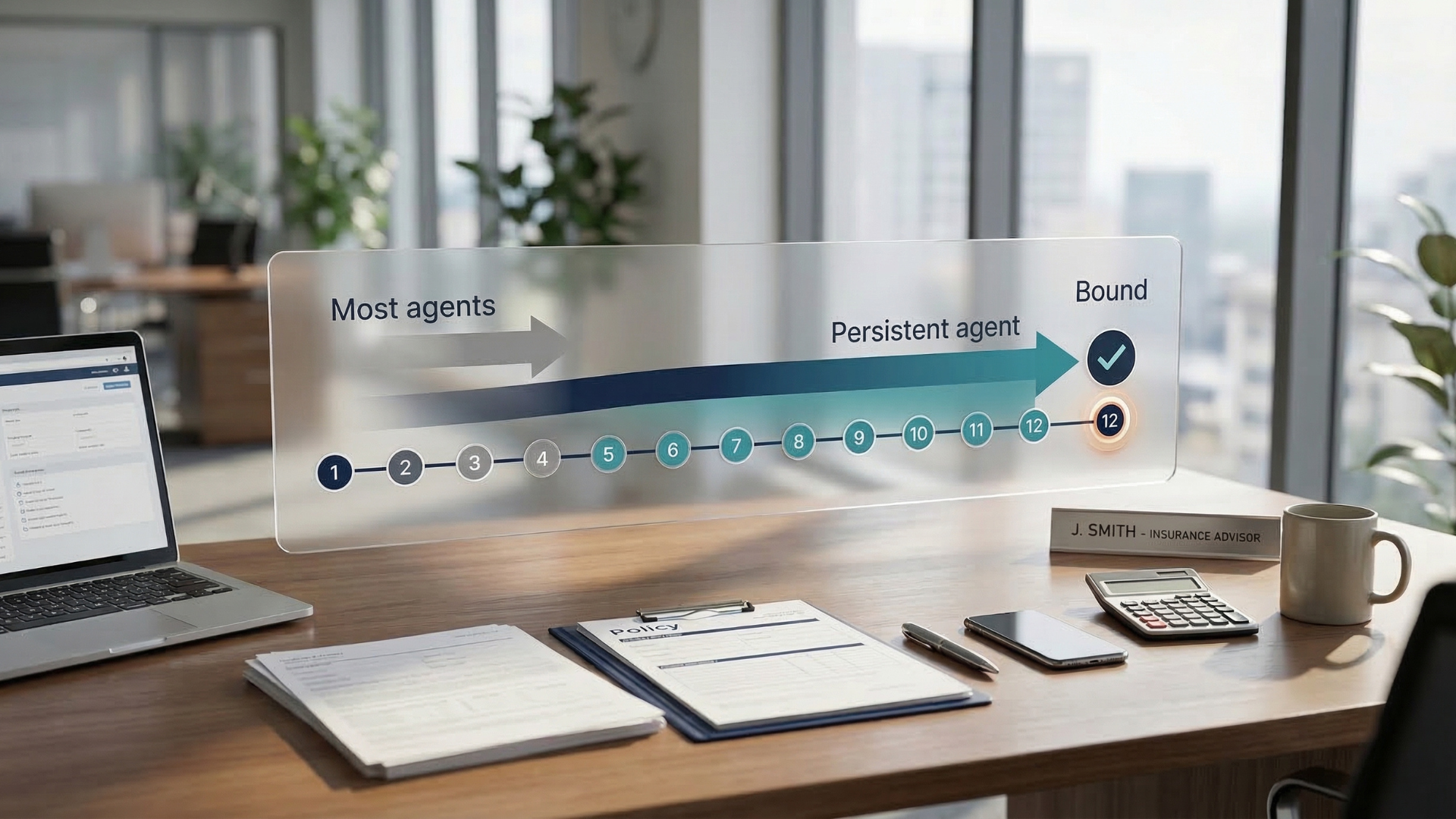
The math is brutal. With exclusive leads running $25 to $70 or more, and cost per acquisition landing between $150 and $400 per converted client, you can't afford to treat each lead as a single interaction. You need to extract every possible opportunity from the data you've already paid for.
When you quote a prospect, you're not just running numbers for today. You're collecting information about their coverage history, their violations, their claims, their expiration dates, and their carrier relationships. That information has a shelf life far longer than one phone call.
The speeding ticket that kills today's rate drops off in eight months. The at-fault accident that's inflating their premium ages out in two years. The prospect who just renewed and won't switch mid-term has an expiration date sitting right there in their dec pages.
Every one of those dates is a future touchpoint. Every one is a reason to reach back out with something specific and useful -- not a generic "just checking in" email that gets deleted without being read.
The difference between a spreadsheet and a system
Here's where most agents who understand this concept still fall short: tracking it all manually.
One agent with fifty quoted-but-not-bound prospects can maybe keep track of key dates in a spreadsheet or a calendar reminder. An agent running two hundred or three hundred internet leads a month? That's not sustainable with manual tracking. Dates get missed. Follow-ups slip. The prospect who was ready to hear from you in December gets a call in March, after they've already rebound with someone else.

When you collect policy data through InsurGrid's secure link, you're not just getting a quote-ready snapshot. You're getting structured data -- violation dates, claim dates, coverage limits, carrier details, expiration timelines -- that tells you exactly when to circle back and why. InsurGrid's AI-powered policy intelligence can flag when those windows open, so you're not scrolling through a spreadsheet every morning trying to remember whose ticket drops off this month.
The data does the remembering for you. You just show up with the right message at the right time.
The 18-month window
Stop measuring lead ROI on the first call. The real return on an internet lead isn't whether you bound a policy the week it came in. It's whether you captured enough data to work that prospect over the next 12 to 18 months.
The agent didn't close that deal in the spring. He closed it in December. And the prospect didn't choose him because of price. They chose him because he was the only agent who understood their situation well enough to tell them when it would change.
That's not luck. That's data, patience, and a system that keeps track of both.




.svg)


